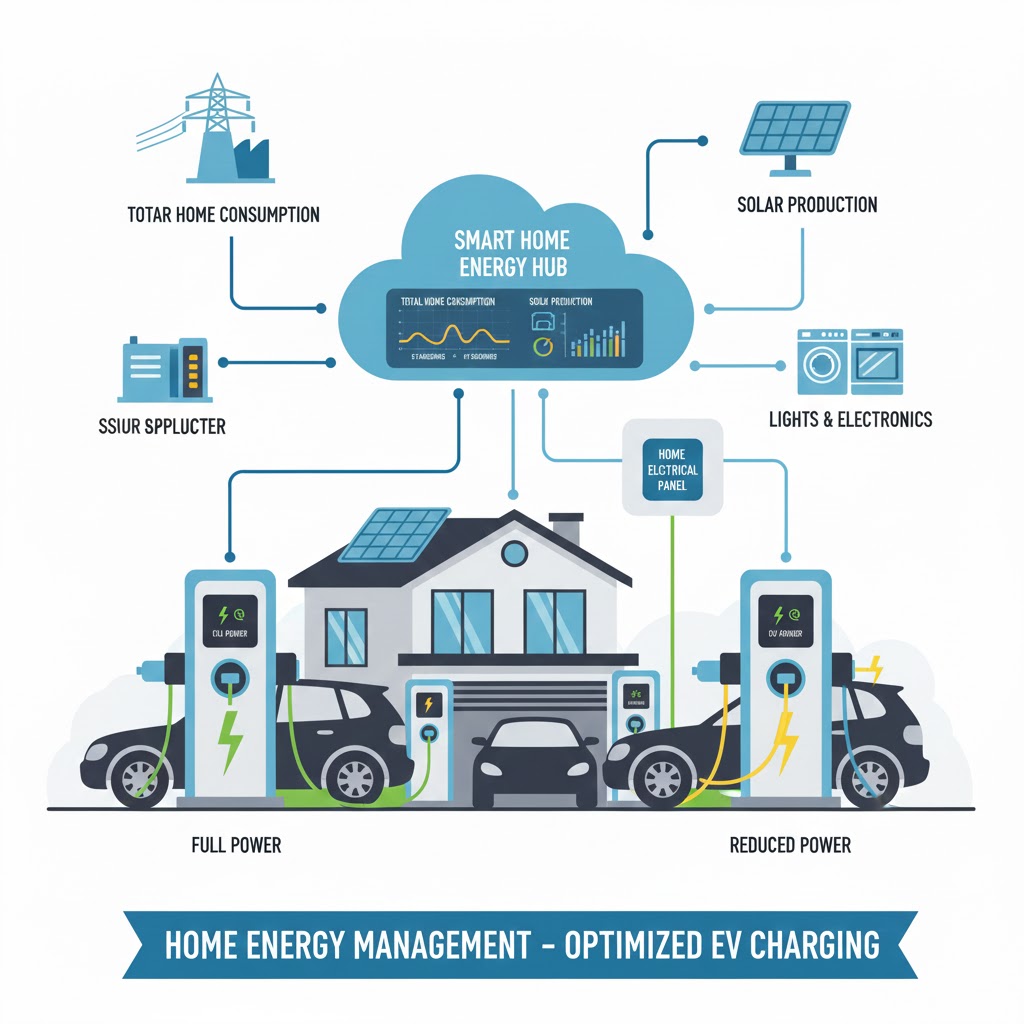
Load Management for Small Electrical Services: How to Safely Add an EV Charger Without Upgrading Your Panel
Load Management for Small Electrical Services: A Homeowner’s Guide
Adding a Level 2 EV charger can be challenging if your home has a smaller electrical service (60A–125A). Many homeowners are told they need a costly panel upgrade, but that isn’t always true. Modern load management solutions can let you charge safely without replacing your whole electrical system.
Below is a simple guide to help you understand your options.
🔌 What Is Load Management? Load management is a smart way to control how much power your EV charger uses based on what the rest of your home is consuming. Instead of running your panel at full capacity, it automatically reduces or pauses EV charging if your home approaches its maximum load. This keeps you safely within electrical limits without adding stress to an older or smaller service panel.
⚡ Why Load Management Matters for Smaller Services Most Level 2 chargers draw 32–48 amps, which is a big portion of many residential service panels. Examples: 60A service → A 40A EV charger might overwhelm the system 100A service → Can often handle charging with load management 125A service → Usually works fine but still benefits from smart control
Instead of upgrading to 150A or 200A—which can cost $2,500–$8,000—load management adds protection at a fraction of the cost.
🔍 Types of Load Management
- Built-in Smart Charger Load Management
Many modern chargers include features like:
- Dynamic load balancing
- Power sharing (if you have multiple chargers)
- Circuit pausing or reducing amperage
- Scheduled charging
Brands like Wallbox, Autel, and Emporia already do this. These systems automatically lower the charging speed when your home’s electrical load spikes (oven, dryer, AC, etc.).
- Service Entrance Load Management Devices These monitor the total household load and cut back EV charging when nearing limits. Examples include: - DCC Load Management Devices - Autel Load Controllers - Home energy monitors with EV integration
These work even with older panels and are often recommended when the panel can’t handle a full-size charger.
- Simple Amperage Reduction
Sometimes, the cheapest option is simply adjusting the charger to a lower setting:
- 48A → 40A
- 40A → 32A
- 32A → 24A
You still get Level 2 charging—just slightly slower—but often fast enough for overnight use.
📉 When You Don’t Need Load Management
You may not need any special hardware if: - Your service panel is 150A or 200A - Your panel has plenty of available capacity - You only need a 32A (7.6 kW) charger, which fits most homes - You rarely run multiple high-load appliances at the same time
A licensed electrician can confirm this with a load calculation.
💡 What’s the Best Solution for Most Homes? For small services (60A–125A), the most common and effective solutions are: - A smart charger with adjustable amperage - A load-management device - A load calculation from a qualified electrician
Most homeowners don’t need a full panel upgrade when these options are used correctly.
💬 Tips for Homeowners
- Ask your electrician to show you the load calculation
- Make sure the charger supports continuous load requirements
- If you’re planning solar or a heat pump later, mention that upfront
- Don’t assume a panel upgrade is required, get a second opinion
🧰 Why This Matters
A properly managed electrical system keeps your home safe, avoids nuisance breaker trips, and reduces the chance of overloading your service. For many homes, load management is the difference between a simple EV charger installation and a multi-thousand-dollar electrical overhaul.